
LangChain opened the LangSmith Tool Gateway public beta on November 19. An engineering team registers Model Context Protocol servers, connects the accounts those servers expect and presents selected tools to an agent through a common gateway. The service can apply call policies, request confirmation and record metadata about outcomes. It is available on LangSmith Cloud Plus and Enterprise in the listed Google Cloud US, Europe and Asia-Pacific regions and AWS US. The documentation excludes Azure US. Each of those qualifications matters for a team weighing an introduction into an existing deployment. LangChain launch announcement · Tool Gateway availability
The change is easiest to see in a support workflow. A staff member asks a service to find an open case. A scheduled job also checks cases for missed response targets. Both may reach the same ticketing service, while the staff member’s access should follow their own account and the scheduled job needs a distinct identity with an explicit set of responsibilities. Connecting them to the same registry makes it easier to see what each uses. It also puts pressure on the central configuration. If the person running the workflow and the account that touches a record become difficult to distinguish, a shared gateway can make that ambiguity common to several teams.
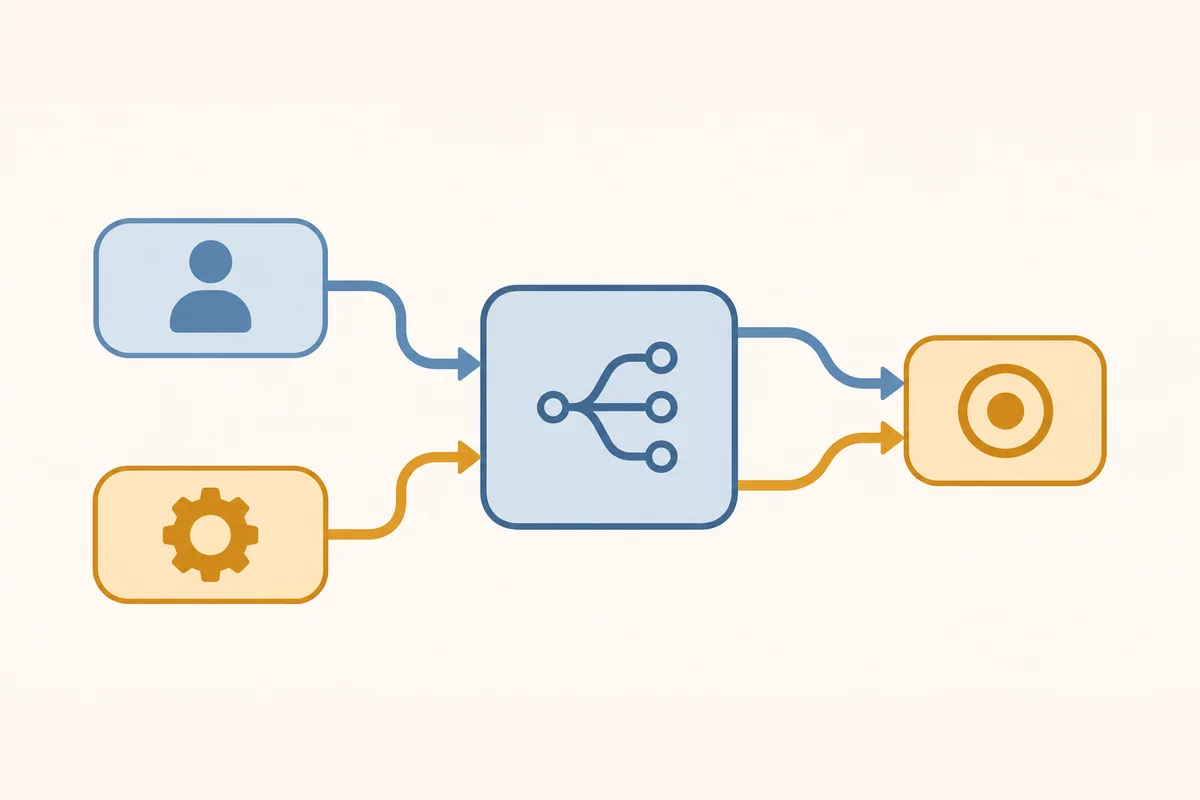
A shared connection point changes the operating model#
The feature sits between an MCP client and remote MCP servers. Through MCP, a client can discover descriptions of tools and ask a server to invoke them with structured arguments. LangSmith groups tools from several servers into kits. The kit gives the client a single URL to use, and its contents can be narrower than the servers’ complete inventories. LangChain provides built-in connections for services such as Google, Microsoft and GitHub and also supports registered remote servers. A configured account can be reused where the same caller and server are expected. That reduces duplicated work when several applications use the same service. LangSmith architecture and scope
There is a difference between release management and connecting an application. A platform team may want one owner to register each server and a separate owner to decide what a particular workflow uses. One change to a registered server can affect many clients. Renaming a tool, changing its accepted fields or rotating a credential can show up in different applications in the same afternoon. A useful inventory pairs each server and each kit with an owner, a list of dependent workflows and a version or change record. The gateway takes work out of individual clients and creates a common place where changes need to be understood before they reach the clients.
Search mode can help when a kit has many tools. The client can search for a smaller list relevant to its current task instead of loading all descriptions into its working context. A smaller initial list can reduce input size and help the client distinguish similar actions. The search itself also becomes part of the workflow. Teams can measure discovery and execution separately and check how often a sensible action remains hidden by its name or description. A kit with two tools and one with a thousand are likely to need different evaluations. The result depends on how tools are defined and selected as well as how they are published. Tool Gateway architecture and search behavior
Tools with ambiguous names illustrate why this matters. An application may have one action that prepares a reply and another that sends the reply. Both can appear relevant when a staff member asks the agent for help handling the same message. A well-designed kit presents the preparation action to a drafting workflow, and an explicit access rule handles sending. Names and descriptions improve selection. The service’s permissions and the gateway’s policy govern execution. That split lets operators remove ambiguity where possible and still know what the system allows if the application chooses a different action.
Follow the identity into the application#
There are two points of authentication in a typical call. The client proves its identity to the gateway. The gateway then presents the credential the selected MCP server expects. LangSmith can select a credential connected by a user, one tied to an agent environment or one stored under a shared profile. It also supports a workspace credential for qualifying API-key servers. A public server may require no downstream credential. The account that made the gateway request and the account that the destination sees can therefore be different. Anyone investigating a write needs to understand both. LangSmith account connection documentation
For an interactive application, using the reader’s or employee’s delegated access can keep destination permissions aligned with the person making the request. The accounting system, for example, may already allow different teams to read different ledgers. A gateway does not have to reproduce that policy if the destination receives the appropriate credential and evaluates it. On first use the gateway may ask the user to connect the target account before the call can continue. The application developer needs to test the experience of an unconnected account, an expired grant and a person whose permissions have changed. Starting a connection and completing the business action are distinct events, especially if a later retry could create a record.
For a background task, a dedicated service identity removes dependence on the person who originally set it up. It creates a clear place to put permissions, rotate a credential and manage access when that employee leaves. A profile can share credentials among several workflows. The convenience is real when those workflows have a common purpose and owners can explain the sharing. The same sharing widens the number of workflows affected by a revoked grant, mistaken permission or rotation. The engineering decision is where credential sharing is justified by matching responsibility. Environments that have different duties or reach different data need a way to keep those accounts distinct. Acting as users and agents
Workspace-wide credentials deserve particular attention. The documentation says a workspace credential replaces the other stored owners’ credentials for that server. It also prevents a different owner from connecting while the shared credential is configured. Switching modes changes how every dependent workflow reaches the service. For a public search service with a single organization key this may be expected. For a case system whose permissions depend on which employee is signed in, sending calls under one account changes what the destination can enforce and record. Before a shared credential goes into service, the decision should identify the account owner, consumers and the expected path for reversing it if a test reveals a wrong assumption. Credential ownership and workspace behavior
A company identity provider is yet another part of the chain. LangChain documents options for a backend to act with a user identity, or a client to use a token from a linked identity provider. The documentation says identity-provider-only callers can reach servers or kits across that workspace, subject to controls on invocation. A platform team should therefore evaluate who receives a token and which actions those users can actually invoke on the gateway. It also has to check what the downstream account can do. The MCP specification’s authorization guidance treats tokens as intended for a specific recipient. Preserving distinct credentials for the upstream and downstream hops helps make the boundary verifiable. LangSmith caller identity options · MCP authorization security considerations
These distinctions affect ordinary support. An application can return an identity error before the gateway selects a destination account. The gateway can ask for a missing downstream grant. The destination can recognize the credential yet refuse access to a particular record. A useful error report tells operators which of those happened. Retrying a revoked grant because the destination returned a permissions error wastes time and can obscure a configuration change. A test with accounts that can see different synthetic records can show which permissions the destination evaluated and whether the client explained the outcome to its user. The practical test of delegation is consistent access across ordinary changes in staff, roles and environments.
Tool discovery and call policy have different jobs#
LangChain says a kit curates the tools shown to an agent. The permissions of a caller are enforced separately. For a call otherwise within reach, the documented policies block matching calls or require approval. A matching block wins over an approval policy, and calls without a matching restriction are allowed by default, subject to the remaining permissions. These rules apply to tools reached through the gateway’s supported entry points. An organization rule can cover more than one workspace. A workspace rule can address a local service or team. The administrative roles for changing them should reflect the places the resulting decisions will apply. Tool Gateway policy rules
The shape of a good test follows from that division. Start with a tool that reads a synthetic record and another that makes a small, reversible edit in a test system. Watch which tool the agent selects, capture the expected identity and verify which action the destination received. Then check the same allowed and blocked actions through the entry points supported for that deployment. The desired result is that selection affects usability and the approved policy consistently governs execution. A dashboard that shows a small kit does not answer what happens at invocation time. A reliable test ends at the application record and can be repeated after a permission or server update.
The gateway can enforce the calls it handles. The wider execution boundary still depends on deployment. Teams that run software with many integrations should know which procedures go through gateway-managed credentials and which are handled by other authorized systems. This has come up in public discussions of model gateways as a question of whether a shared point is the place where requests actually pass. It matters here because a platform team might hand a gateway report to another department that assumes it covers every agent action. Documented routing, scoped destination access and the application’s own records give a clearer account of coverage. The same design principle appears in AWS’s guidance on MCP identity and least privilege. AWS MCP security design guidance
Tool policy is also a different control from record-level policy. An organization may let a support agent invoke a search operation and still require the underlying system to decide which cases that account can see. Two calls with the same tool name can touch very different records. An approval for a tool category can make a human inspect the action, while the data service still needs to enforce its own rules. Keeping ownership of the record close to the application avoids rebuilding changing business context inside a tool catalog. It gives the platform team a defined boundary for testing as well. They can verify both how the gateway decided and how the application protected the object.
An approval is only as useful as the client that can present it#
The documentation describes approval through MCP form elicitation. A compatible client asks the caller to confirm and presents information such as the tool, server, policy and arguments. A separate reviewer is outside the beta’s documented approval flow. That difference affects the choice of workflow. An employee asking a tool to create a draft could reasonably confirm a consequential next action in the same client. A scheduled job that has no visible operator cannot count on the same interaction. A requirement that a different person sign off needs a workflow with a distinct reviewer, permission model and record of the decision. Tool Gateway approval behavior
Confirmation also has an information problem. A prompt to allow an update can be clear on a small synthetic record and hard to understand when a production tool accepts a long structured request. A person needs to know what will change, which account will do it and whether the request can be repeated safely. It helps to keep writes narrow, provide a stable description and make a client show the target record or change. An application can build a preview from its own data before asking for a write. That makes the confirmation about an intelligible operation. A series of repetitive confirmations across a busy shift can wear down attention even if each of them technically requires a response.
The first fit should be judged in the client and plan the team actually runs. LangChain presented examples including its own agent clients, Claude Code and Cursor, and the gateway has a common MCP interface. Specific client behavior, especially whether an approval form appears and how it handles failure, is part of the integration. The vendor also directs readers interested in deny policies and audit logs to its team. A product announcement and an enabled account feature are different levels of evidence. Teams can document which roles, plans and regions are enabled before they depend on a control in a consequential environment. LangSmith client setup · LangChain beta announcement
What the trace can tell an investigator#
LangSmith documents two ways to record Tool Gateway traces. With the appropriate context, a tool call can appear under the originating agent run. A workspace administrator can also enable a separate project that records tool calls made through the workspace. The traces include metadata such as the tool, server, identity, result status and duration. LangChain says the gateway trace does not store the arguments or returned content. That reduces the data placed in this record. It also means an investigator looking for what was sent or what changed should refer to the application’s own records and any content that was deliberately collected by the client. Tool Gateway tracing and data fields
Consider an employee who says a ticket was closed unexpectedly. A gateway trace can identify the time and call, the credential owner and the returned status. The ticket platform’s history can identify the ticket, the resulting status change and the service account seen by that application. Joining the two is easier when an operator can use the same known event or request identifier in both places. This is particularly useful for timeouts. A gateway timeout tells the operator that the reply was unavailable within a window. It leaves a question about whether the application performed the change before the reply was lost. A client retry strategy should reflect the behavior of that action and verify state before repeating a change when possible.
Trace completeness also depends on the route and configuration. LangChain describes requirements for associating calls with an agent run and separately turning on workspace-wide recording. It says that an identity-provider-only caller is excluded from its nested tracing method. Enterprise audit logs have their own role and scope. Those distinctions make a short evidence exercise worth doing before the feature is relied upon. Choose an allowed read, a policy block and a failed upstream operation, then see which records and timestamps the operator can retrieve. Include a case in which a service identity runs whether or not a human is present. What matters is whether the right people can retrieve the expected evidence in the incident they actually have. Trace and enterprise audit coverage
Metadata still deserves care. An account identifier, workspace and tool name can disclose organizational activity even when an argument or response is excluded. The same agent run may have client-side logging policies of its own. A platform team has to specify who can review records, which identifiers help correlate them and how long they are useful. Cross-application data protection depends on every layer that records information. An inspection of one trace format says little about a tool server’s own logging or what an agent sends to an observation project. A joint review with application owners is more practical than treating the product’s defaults as a description of the entire logging system.
Where the public beta is likely to pay off#
The strongest early case is a team that already operates several MCP clients and has repeated work connecting the same approved services. A shared registry, known credential owners and a consistent record format can shorten onboarding and give policy administrators a central point for their work. The benefits are measurable. How long does adding a second client take, how many independent credentials must be rotated, and how easily can an operator connect a tool call to the downstream record? Teams can compare those observations before and after a limited rollout. The relevant baseline is the way they run integrations now.
An additional gateway gives operations another dependency. Its service can return its own errors, and the destination can have a second set of limits and failure modes. LangChain’s documentation enumerates beta limits, including a 60-second wait for the upstream server to start responding and request rate limits. A team can check whether its workload fits by measuring a realistic spread of call durations, prompts for credentials and counts of downstream errors. A job peaking at the same hour across many teams might need a different scheduling approach from a desk tool called at irregular intervals. Giving the gateway and the destination separate health indicators helps when many clients are affected at once. Tool Gateway limits
For a fair trial, keep the downstream tool and the test workload fixed across the two configurations. Measure ordinary and slow calls separately. The time before the gateway forwards a request and the time the downstream application takes to respond can have different causes. A human confirmation should have a separately counted wait, since combining it with service latency can make a technical regression hard to see. Include an incident exercise that starts from a reported change and times how long it takes to recover the gateway identity and the application record. These observations can establish the cost of the additional component and the value of the evidence under the same conditions.
A small pilot can show whether responsibility really becomes clearer. Give an interactive workflow user delegation and a simple test job a dedicated service identity. Agree on a trace location and the application record to use for verification. Check successful and denied actions, reconnection, permission changes, and whether each person can see a clear next step. Then make a planned configuration change and see how quickly the owners identify every affected workflow. Teams that can already answer those questions may mainly gain operating convenience. For teams that cannot, the pilot will reveal where better control is needed. The beta puts the evidence within reach for calls routed through it. Its value will come from how reliably those calls can be understood in the systems that actually hold the data.